
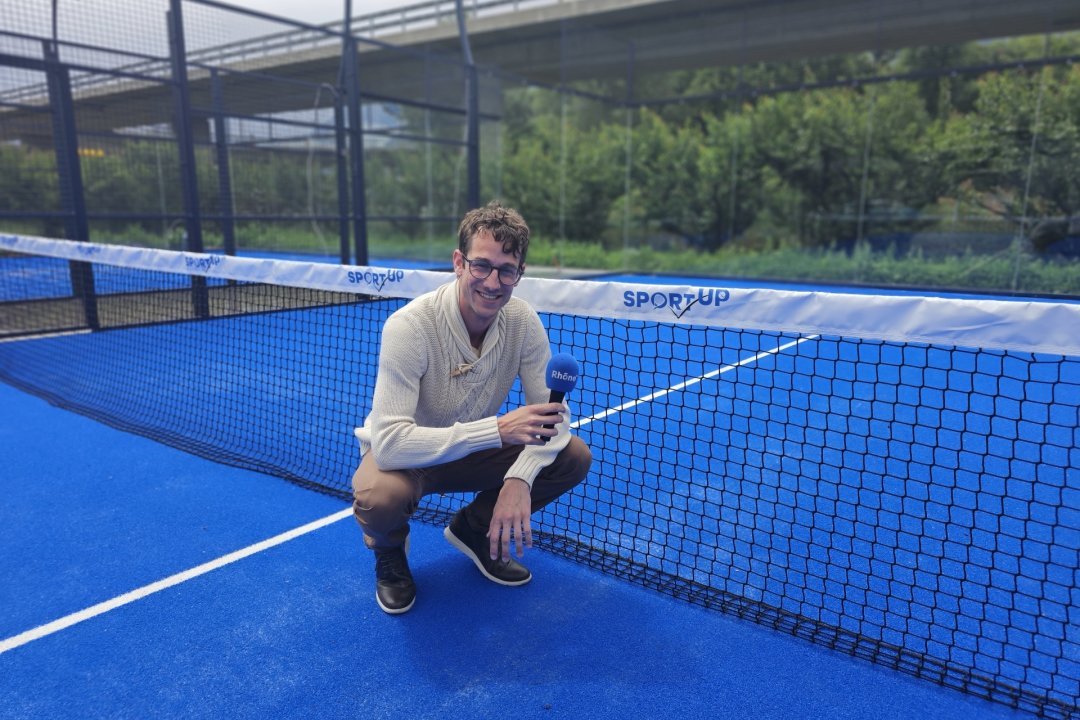
In this MCP interview, Gaëtan Gabioud shares his personal journey, his experience with the Swiss Padel Federation, the early days of padel courts in Riddes and his belief in collaboration. The answers below are translated from the original French interview.
PERSONAL BACKGROUND
1. To start, could you introduce yourself? Where are you from, and how did padel become part of your life?
I grew up in Valais, surrounded by all kinds of sports. That passion took me to Brig to play badminton in the Swiss National League B and later to a school programme focused on sport. I then went to England to study for a bachelor’s degree in physical education. Padel became a more serious part of my life while I was working on a university project at the Sports Management School in Lausanne.
2. How did you discover padel, and what attracted you to the sport immediately?
During a stay in Belgium, friends introduced me to a new racket sport. I had never heard of padel back in Switzerland, yet my friends in Brussels were already training regularly. I enjoyed the game from the very first rallies because it is so accessible.
3. When did you decide to become more involved and consider building padel courts?
My university work on padel gave me a theoretical understanding of the sport. Once I graduated, it felt natural to play a more concrete part in developing padel in Switzerland.
4. What does padel represent to you today: a passion, a business project or a mission?
I have always valued what sport stands for. Being able to actively promote physical activity through padel is incredibly rewarding to me.
5. You have been involved with the Swiss Padel Federation. What was your role?
During almost two years of involvement at national federation level, growth was remarkable. The number of licensed players nearly doubled, new courts continued to be built and media interest increased. It was a real pleasure to contribute to that development, even though there was still a great deal to do. Despite the rapid progress, it would be wrong to think that everything was already professionalised.
As treasurer, I helped manage the federation’s finances under the president’s supervision. I also contributed to strategic discussions and had the opportunity to represent Switzerland at the International Padel Federation’s general assembly in Doha.
6. What motivates you to help the sport progress in Switzerland every day?
The social values that padel brings are very important to me.
PADEL IN SWITZERLAND
7. How do you view the sport’s development in Switzerland in recent years?
Over the years I have worked on this subject, I have seen padel grow considerably. Month after month, week after week, the sport has reached new milestones. The outlook is very encouraging.
8. What do you see as the main strengths and weaknesses of Swiss padel?
Switzerland began growing later than many neighbouring countries, so there is still plenty of room for development. The sport’s intrinsic values, the friendly atmosphere it creates and its accessibility all suggest a promising future.
In such a small country, I would like to see more collaboration at every level. Rivalries, in general, hold sport back. My perhaps utopian vision is that everyone contributing positively to padel can find their place within a united community working in harmony.
9. What concrete efforts would help Swiss padel take the next step?
Exponential growth inevitably attracts competing interests. If we want the sport to keep developing in a healthy way, we must avoid putting individual interests ahead of the sport’s collective growth.
10. Where do you see Swiss padel in five or ten years?
Padel is a worldwide phenomenon and will become more widely played in Switzerland too. I am convinced it will continue to professionalise over the coming years. I cannot say exactly how, or to what extent.
VALAIS AND LOCAL PROJECTS
11. Tell us about the two padel courts built in Valais. Where are they, and who plays there?
The courts were built in Riddes, where the municipality was very receptive to the innovative idea of introducing padel courts. They were the first two courts on the Rhône valley floor. Their proximity to the motorway entrance and railway station made the site ideal.
At first, the courts mainly attracted athletes who already knew the sport. Over time, people discovered how accessible padel was and how much fun they could have without any particular previous experience. Families, older players and children soon started filling the remaining time slots.
12. What is padel culture like in Valais? Are local clubs and players working together?
New connections are growing between clubs, coaches, players and venue managers. It is a very positive and constructive dynamic.
THE PEOPLE BEHIND THE PROJECT
13. What has been your most memorable moment in padel so far, on or off court?
Attending the world championships was an invaluable experience for me. That was when I understood just how much padel could change the sporting landscape.
14. Is there an anecdote that captures how far the sport has come?
When I was writing my university dissertation, people looked at me in disbelief when I said that in five years we might have around ten padel courts in Valais.
Those five years went by, and we could already count considerably more than that.
15. Finally, what would you say to readers who are discovering padel or thinking of getting involved?
To anyone who has never dared to try padel, I can only encourage you to give it a go.
And to anyone planning something more ambitious in padel, each person should bring the value of their own experience. As I owe around 99% of what I have learned in this field to other people, I will stay humble and avoid giving grand advice. For me, collaboration is the best way to help padel grow.
Thank you, Gaëtan Gabioud, for your time, perspective and contribution to Swiss padel. Your story highlights the people and cooperation that help a sport move forward.
Interview note: Roles, growth figures and court counts reflect the interviewee’s account at the time of the original conversation; they are not presented as current statistics.